
Anyone managing an Airbnb knows the pattern well: just before arrival, the guest asks about parking; shortly after check-in, they ask for the Wi-Fi password again; and before check-out, they want to know where to leave the keys.
Most of these questions are perfectly reasonable. The problem starts when the answers are scattered across different messages, written on a printed document inside the property, or included in a long text that is difficult to read on a smartphone.
Below, we have gathered 15 of the most common questions hosts receive and explain how the information can be better organized for guests.
Before Arrival
1. What is the exact location of the property?
A simple address is not always enough. This is especially true on islands, in villages, coastal areas, or locations where street numbering is unclear. A Google Maps link, coordinates, a nearby landmark, and a photo of the entrance can help guests find the property without unnecessary calls.
2. Where can i park?
Guests need to know whether there is a private parking space, whether street parking is allowed, or where the nearest public parking area is located. It is also useful to provide information about possible parking fees, restrictions, busy hours, and the distance from the property.
3. How do i access the property?
Instructions should clearly explain where the entrance is and how to use the key, lockbox, or electronic lock. Where necessary, a photo or short video can be much more effective than a long paragraph of instructions.
4. What time can i check-in?
In addition to the official check-in time, it is helpful to clarify what happens in case of an early arrival, whether luggage storage is available, and when the final access instructions will be sent. This helps reduce uncertainty before the journey even begins.
5. How can i get there from airport/port?
Available transportation options, estimated travel times, and useful links for taxis, buses, or transfers are information guests often need before arrival. If the property works with a transfer service, the option to book a transfer can also be presented.
6. What is the Wi-Fi password?
This is usually one of the first questions guests ask after arrival. The network name and password should be clearly displayed and easy to copy, so guests do not have to search through an old message in their conversation.
7. How does the air conditioning or heating work?
Different controls, thermostats, and central systems can easily confuse guests. A few simple instructions, together with a photo showing the correct buttons and any useful restrictions, can prevent unnecessary calls as well as incorrect use.
8. How do appliances work?
The water heater, coffee machine, oven, washing machine, TV, or safe may not always work in the way guests expect. Instructions should be short, specific, and available exactly when the guest needs them.
9. Where can i find extra towels and essential supplies?
It is useful to explain what is included in the stay, where additional supplies can be found, and how guests can request anything else they may need. This helps avoid misunderstandings and gives guests a clear sense of support.
10. What are the property rules?
Quiet hours, smoking, pets, pool use, additional guests, and waste disposal should be presented clearly and in a friendly tone. House rules work best when they are easy to find and are not hidden inside a long block of text.
About the Area
11. Where do you recommend to eat?
Personal recommendations from the host are often more valuable than a simple internet search. Instead of providing one long list, recommendations can be organized by category, such as breakfast, local cuisine, family-friendly restaurants, drinks, or delivery options.
12. Which beaches or attractions do you recommend
The best recommendations are not the same for everyone. A family, a couple, and a guest staying for only two days will have different needs. Useful information can include distance, estimated travel time, suitability for children, and anything guests should know before setting off.
13. Where is the nearest supermarket, pharmacy or ATM?
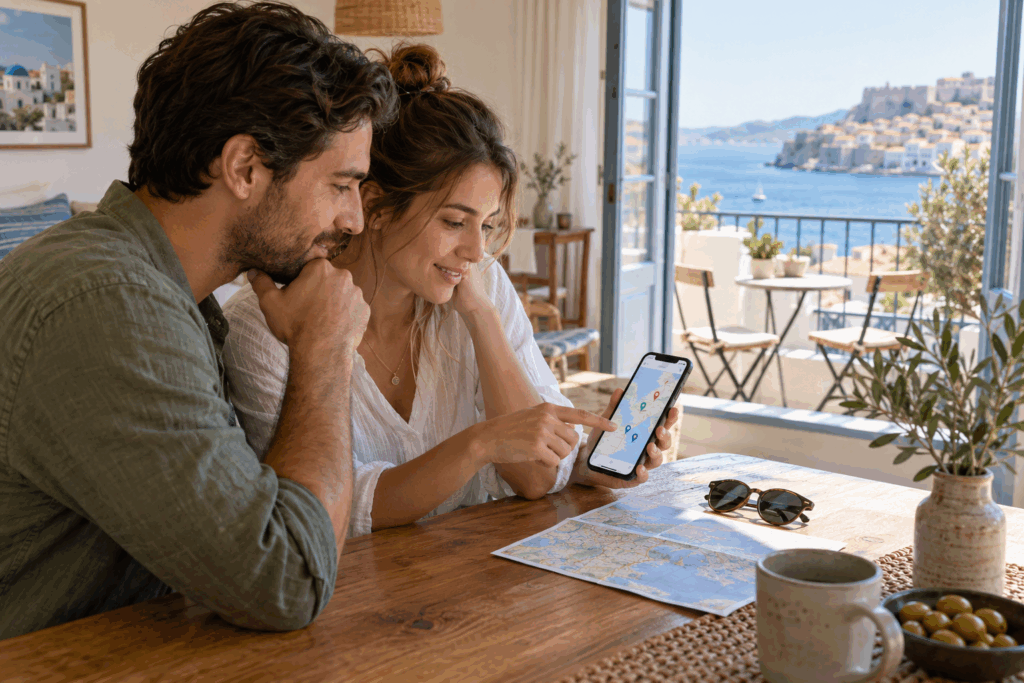
These everyday services become especially valuable when guests need them immediately. A map link, basic opening hours, and a few short directions are usually enough to help guests without having to contact the host.
14. Can we book an activity or transportation?
Excursions, water activities, car rentals, transfers, and local experiences can become an important part of the guest experience. When presented in an organized way and at the right time, guests can more easily discover what they can do at the destination and proceed directly to contact or booking.

Before Departure
15. What do we need to do before check-out?
The check-out time, where to leave the keys, waste disposal instructions, and luggage storage options should be clearly explained. The same section can also include a way to contact the host regarding late check-out and, after the stay, a friendly invitation to leave a review.
Why Aren’t Automated Messages Always Enough?
Scheduled messages are useful, but they do not solve the problem on their own. As the conversation grows, guests may struggle to remember which message contained the Wi-Fi password, parking information, or check-out instructions. Long paragraphs are also difficult to use on a small screen and do not always present photos, maps, videos, and local recommendations effectively.
Messages can instead be used to direct guests to one permanent, organized source of information, rather than trying to fit every answer into the conversation.
All the answers in one digital guest guide
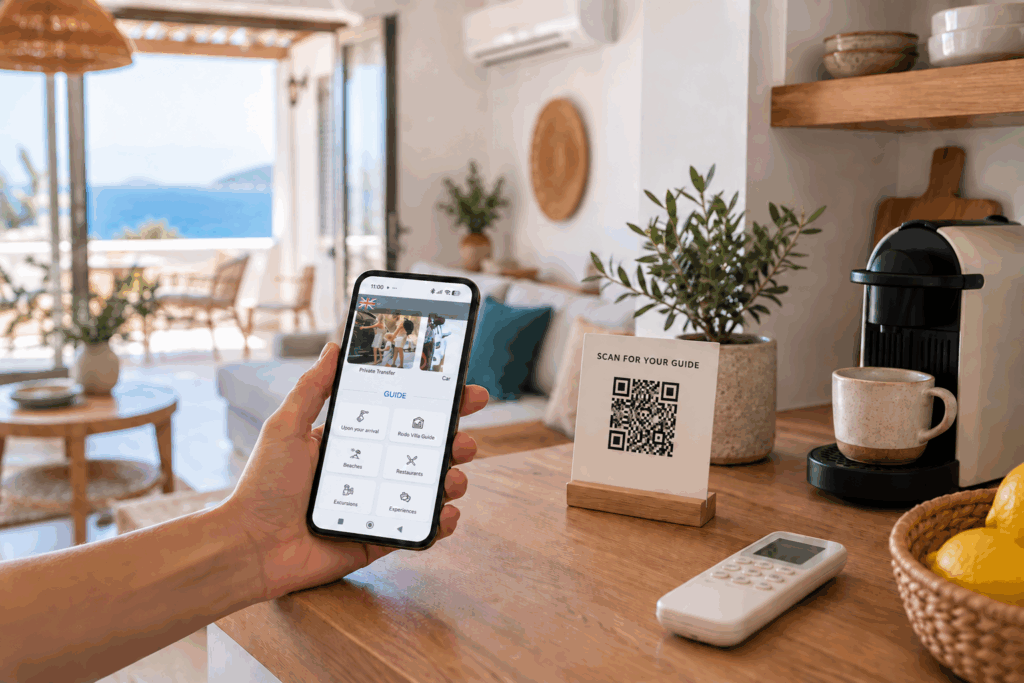
With MENUFI’s digital guest guide, useful property information can be gathered in one easy-to-use environment. Guests can access the guide from their smartphone without installing an app, either through a link sent before arrival or by scanning a QR code inside the property.
The guide can include arrival information, Wi-Fi details, appliance instructions, house rules, local recommendations, maps, services, and activities. The content can be available in multiple languages and updated without the need to print new materials.
The goal is not to replace personal communication with guests. It is to prevent hosts from spending time every day answering the same practical questions while, at the same time, providing guests with a more organized and convenient stay experience.